

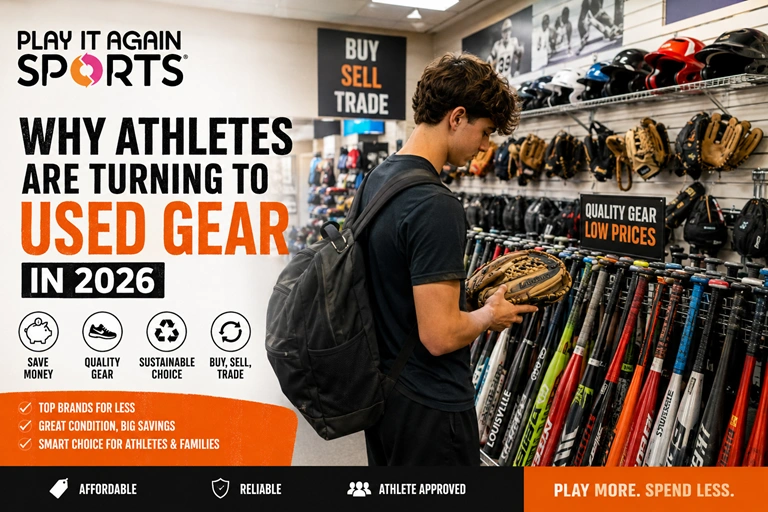
Play It Again Sports: Why Athletes Are Turning to Used Gear in 2026
SEO Title
Play It Again Sports: Save Money on Gear in 2026
Meta Description
Play It Again Sports helps athletes save money with quality used gear. See why resale equipment is gaining popularity in 2026.
URL Slug
play-it-again-sports-used-gear-save-money-2026
Focus Keyword
Play It Again Sports
Secondary Keywords
used sports equipment, used sporting goods, sports gear resale, affordable sports equipment, buy sell trade sports gear
Tags
Play It Again Sports, used sports equipment, sports gear, sporting goods, sports resale, fitness equipment, money saving tips, sustainable sports
Play It Again Sports: Why Athletes Are Turning to Used Gear to Save Money in 2026
A new season can get expensive before an athlete even steps onto the field. A growing child needs a bigger baseball glove, a beginner discovers that golf clubs cost more than expected, or a recreational athlete decides to build a home gym. Buying everything new is easy—but it is not always necessary. In 2026, more athletes and families are looking at resale as a practical way to get quality equipment for less, and Play It Again Sports sits directly in that market. The company buys, sells and trades used sports and fitness gear through locally owned stores across North America.
Quick Summary
- Play It Again Sports specializes in buying, selling and trading used sports and fitness equipment.
- Used gear can make expensive sports more accessible, particularly for growing children and beginners.
- Inventory changes constantly because stores source much of their used equipment from local customers.
- Athletes can sell unwanted equipment for cash or trade it toward something they need.
- Used does not automatically mean worn out; shoppers should inspect fit, condition, safety and functionality.
- The resale model can also extend the useful life of sports equipment and reduce unnecessary disposal.
Why Is Play It Again Sports Becoming More Relevant in 2026?
Sports equipment has an awkward financial reality: athletes often need specialized products long before they know whether they will stick with a sport.
A child might join baseball for one season and decide they prefer soccer. A teenager may outgrow a pair of skates before they show meaningful wear. Someone starting strength training may discover that the dumbbells, benches or other equipment they bought no longer fit their routine.
That makes used equipment unusually practical.
Instead of paying full retail for every item, shoppers can look for equipment that has already absorbed its initial depreciation. The savings vary by item, condition, brand and local inventory, so there is no universal percentage that every used product will save. The real advantage is the ability to compare a pre-owned item against a new one and decide where spending more actually matters.
Play It Again Sports has operated in the used sports and fitness equipment space since 1983. Its current business model remains centered on local resale: customers bring in equipment they no longer need, stores assess it based on factors such as condition and demand, and qualifying products can return to the market.
That model is especially useful in 2026 because sports participation does not always follow a straight line. Equipment needs change quickly. Resale gives athletes a way to change equipment without treating every previous purchase as money permanently lost.
The economics are simple
Consider a young athlete moving into a larger size of equipment. Buying new every season can become a significant household expense. If a good-condition used item performs the job just as well, the difference can be redirected toward coaching, tournament fees, travel, uniforms or other parts of the sport.
For beginners, the calculation can be even more appealing. There is little reason to spend heavily on premium equipment before knowing whether the activity will become a long-term hobby.
What Can You Buy at Play It Again Sports?
The selection varies by store because locations are independently owned and their inventories are sourced locally. That changing inventory is part of the appeal—and part of the challenge.
One visit might reveal exactly the golf club, glove or fitness item you wanted. The next visit may have something completely different.
Play It Again Sports says its stores buy and sell a wide range of used sports and fitness equipment. Categories can include baseball and softball gear, golf equipment, fitness products and other sporting goods, although what a particular location buys or has available depends on local demand and inventory.
Baseball and softball equipment
Used baseball and softball gear can be particularly attractive for families because young players frequently change sizes and equipment requirements.
Depending on the location, shoppers may find items such as:
- Baseball and softball gloves
- Bats
- Batting helmets
- Catcher’s equipment
- Cleats
- Bat bags
- Training aids
- Baseballs and softballs
For these products, condition matters. A glove with plenty of life left can be a smart buy, while a heavily worn item may not justify the price.
Golf equipment
Golf is another category where resale can make sense. New clubs can be expensive, and beginners often do not need the latest equipment to learn the fundamentals.
A used club that fits the golfer and is in good condition may offer a better starting point than buying an expensive new set before the player understands what they actually prefer.
Fitness equipment
The resale model also works well for home fitness. Equipment can be bulky, expensive and surprisingly easy to abandon after a change in routine.
A used piece of strength or fitness equipment can therefore solve two problems at once: reducing the purchase price while giving an unwanted item another useful life.
Play It Again Sports also highlights partnerships involving fitness equipment and other sports categories, showing how the resale model is expanding beyond traditional field and court equipment.
How Does Buying Used Sports Gear Save Athletes Money?
The biggest saving is not simply the sticker price. It is buying the right equipment at the right point in its useful life.
1. You avoid paying for brand-new condition
Some products lose value as soon as they leave the original retailer. If cosmetic perfection is not important, a lightly used item can be more economical.
That is particularly relevant for equipment where performance depends more on fit and functional condition than on appearance.
2. You can experiment without making a huge commitment
Trying a new sport can be expensive when every experiment requires a complete new equipment setup.
Used gear lowers the financial barrier. A beginner can test a sport with a smaller initial investment and upgrade later if the activity becomes a serious pursuit.
3. Growing athletes can replace equipment more economically
Children and teenagers can change sizes quickly. Spending full retail prices repeatedly can become frustrating for parents.
Resale allows families to recover some value from equipment they no longer need and potentially use that money toward the next purchase.
4. Selling creates another source of value
The equation is not just “buy cheaper.”
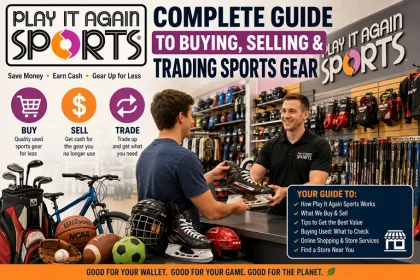
Play It Again Sports also lets customers bring qualifying equipment to a store for evaluation. According to the company’s current process, customers can bring gear without an appointment, have it reviewed based on condition and demand, and receive an offer for cash or a trade toward store merchandise.
That creates a useful cycle:
Buy → use → outgrow or upgrade → sell or trade → buy the next item.
For athletes who regularly change equipment, that can be considerably more practical than treating every old item as clutter.
Is Used Sports Equipment Safe and Worth Buying?
Used equipment deserves inspection. The word “used” should neither automatically scare shoppers away nor automatically convince them that something is a bargain.
The right question is: Is this particular item in good enough condition for its intended use, and does the price reflect that condition?
Check fit first
An inexpensive piece of equipment is not a bargain if it does not fit correctly.
For items worn or held during play, check sizing, comfort and adjustment mechanisms. This is especially important for helmets, protective equipment, footwear and equipment designed for a specific body size.
Inspect wear and structural condition
Look for cracks, deep damage, excessive deformation, missing parts, loose components and signs of improper repairs.
With equipment that absorbs repeated impact, be particularly careful about damage that could affect performance or safety.
Compare with new prices
Before buying, check what a comparable new product costs. Used pricing makes the most sense when the condition and savings justify choosing pre-owned.
A small discount on heavily worn equipment may not be worthwhile. A substantial difference on a lightly used product can be much more attractive.
Ask the store about the item
Local store staff can be useful because Play It Again Sports locations are independently operated and may specialize in different inventory depending on their community. The company’s online ordering information also says stores check gear before shipping to confirm that it is safe, functional and complete with intended accessories.
For online purchases, remember that availability can change quickly because an item may also be available for sale in the physical store.
Why Athletes Are Also Looking at the Sustainability Side
Saving money is usually the first reason shoppers consider used equipment. Sustainability is another.
Sports equipment takes resources to manufacture, package and transport. Extending the useful life of an existing product means another athlete can use it instead of requiring a brand-new item immediately.
Play It Again Sports has explicitly positioned resale as part of a longer-term sustainability strategy, saying it has worked for more than 40 years to keep used sports equipment in the hands of athletes rather than sending it to landfills.
That does not mean every secondhand purchase is automatically environmentally superior in every circumstance. Transportation, product lifespan and actual usage all matter. Still, keeping functional equipment in circulation is a straightforward way to reduce unnecessary replacement.
The company has also developed partnerships focused on extending the life of equipment. For example, Play It Again Sports says its partnership with STX supports resale and circularity for lacrosse equipment, while its partnership with Impex focuses partly on extending the life of fitness equipment.
For athletes, the practical message is simple: if a product still works well, someone else may be able to get meaningful use from it.
How to Get the Best Deal at Play It Again Sports
Used inventory rewards shoppers who are willing to look more carefully than they would at a conventional retail shelf.
Start with a specific need
Instead of walking in thinking, “I want cheap sports gear,” identify the actual requirement.
For example:
- A right-handed youth baseball glove
- A particular golf club type
- A specific size of protective equipment
- Adjustable home-gym equipment
- A replacement bat or training product
A clear target makes it easier to recognize a genuine deal.
Visit more than once
Inventory changes. Play It Again Sports says new items are added to store floors regularly, while its FAQ explains that used equipment is sourced from customers in the local community.
That means patience can pay off. If the first visit does not produce the right item, another visit may.
Use the store locator
Because stores are independently owned and operated, local inventory, purchasing practices and available products can differ.
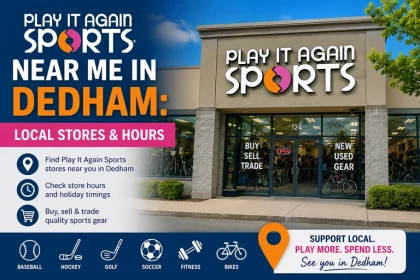
The official Play It Again Sports store locator lets shoppers search for nearby locations and is the best starting point for checking a particular store.
Find a Play It Again Sports location
Consider selling before buying
If you have unused equipment at home, bring it in for evaluation. You may be able to turn forgotten gear into cash or use a trade toward equipment you actually need.
That is one of the strongest features of the resale model: the transaction does not have to end with another item sitting unused in the garage a year later.
What Should You Buy New Instead of Used?
Used equipment is not automatically the best choice for every category.
Safety-critical products deserve extra caution, particularly when you cannot establish their history or condition. Protective equipment should be examined carefully, and shoppers should follow applicable manufacturer guidance regarding replacement, damage and age.
There are also situations where buying new makes sense because the exact fit, warranty, technology or customization is important.
A sensible strategy is to divide purchases into three groups:
Buy used when: the item is durable, inspectable and meaningfully cheaper.
Compare both options when: new and used versions have similar prices or warranties could matter.
Lean toward new when: safety, hygiene, fit, manufacturer recommendations or product history make used equipment questionable.
This approach is more useful than treating “used” as automatically good or bad.
FAQ: Play It Again Sports and Used Gear
Is Play It Again Sports good for buying used sports equipment?
Play It Again Sports specializes in buying and selling quality used sports and fitness gear. Inventory varies by independently owned location, so shoppers should check local availability and inspect each item before purchasing.
Can you sell used sports equipment to Play It Again Sports?
Yes. Customers can bring eligible used sports and fitness equipment to a participating store without an appointment. The store evaluates items based on factors such as condition and demand and may offer cash or a trade.
Does Play It Again Sports sell new equipment too?
Yes. Play It Again Sports stores can carry both used and new sporting goods. The exact selection varies by location, while many stores also make inventory available online.
How can I find a Play It Again Sports store near me?
Use the official store locator and enter your location to find participating stores. Because locations are independently owned, checking the individual store is the best way to confirm current inventory and purchasing policies.
Conclusion
In 2026, buying used sports equipment is less about settling for second-best and more about spending deliberately. Athletes can find quality gear, experiment with new sports, replace equipment as they grow and recover value from items they no longer use.
Play It Again Sports makes that cycle particularly straightforward by combining buying, selling and trading through locally owned stores. The smartest approach is not to buy used simply because it is cheaper. Compare prices, inspect condition, prioritize proper fit and know when new equipment is the safer choice.
For athletes and families watching their budgets, that can turn sports resale from a backup option into a regular part of how they shop for gear.